

The Neighboring Gap
The Framework
We've never been more connected, or more alone.
The distance between how connected we look and how supported we feel is the Neighboring Gap. It shows up in your team, your community, and your own life - quietly, until it doesn't.
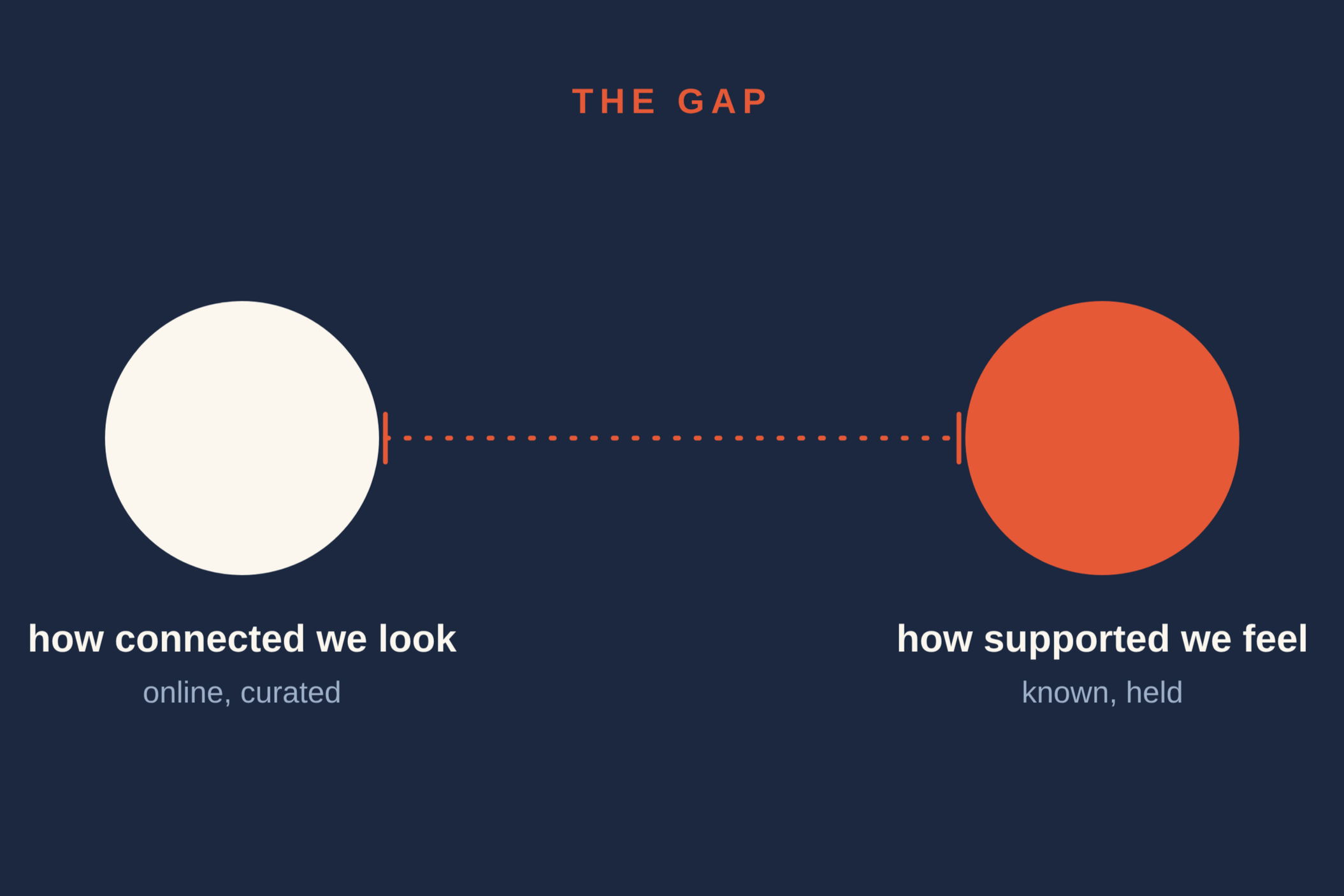
39% of employees feel someone at work truly cares about them, down from 47% in 2020. That's not a perks problem. It's a neighboring problem.
Interested in Having Sophia Speak to Your Team?
BOOKING INQUIRIES
Interested in Sophia speaking at your event?
Sophia is a dynamic, relatable speaker who inspires and ignites positive change. We'd love to hear about your upcoming event and create a meaningful experience for your audience.
"Every one of these books taught me something true. But none of them taught me how to let someone bring me a casserole. That's the gap I'm trying to close." - Sophia Fifner
READING LIST
The books behind the framework.
These are the thinkers who shaped
The Neighboring Gap, and what each one left out that I'm trying to fill in.
-
Bowling Alone | By: Robert Putnam
Named the collapse of civic connection before most people could feel it. He saw the gap. I'm working on how to close it.
The Upswing | Robert Putnam
The long arc of American community — and how far we've drifted from the "we" era. The data is sobering. The possibility it opens is why I keep going.
-
Together | By: Vivek Murthy
The most important public health argument for neighboring I've read. Murthy makes loneliness a medical case. I make it a practice case. Both are true.
The Art of Gathering | By: Priya Parker
How we gather either deepens connection or wastes the chance. Parker assumes you're hosting. I say: you don't have to host. You just have to show up.
Belonging | By: Geoffrey Cohen
Belonging isn't something you feel passively — it's built through small, repeated signals. The scientific backbone of the five practices.
-
Untamed | By: Glennon Doyle
What it costs to perform strength at the expense of truth. The "I've got it" wound in memoir form.
All About Love | By: bell hooks
Rugged individualism as a wound, not a virtue. The philosophical root of why we stopped letting each other in.